Skip to content
COSYSPACESInterior Designers

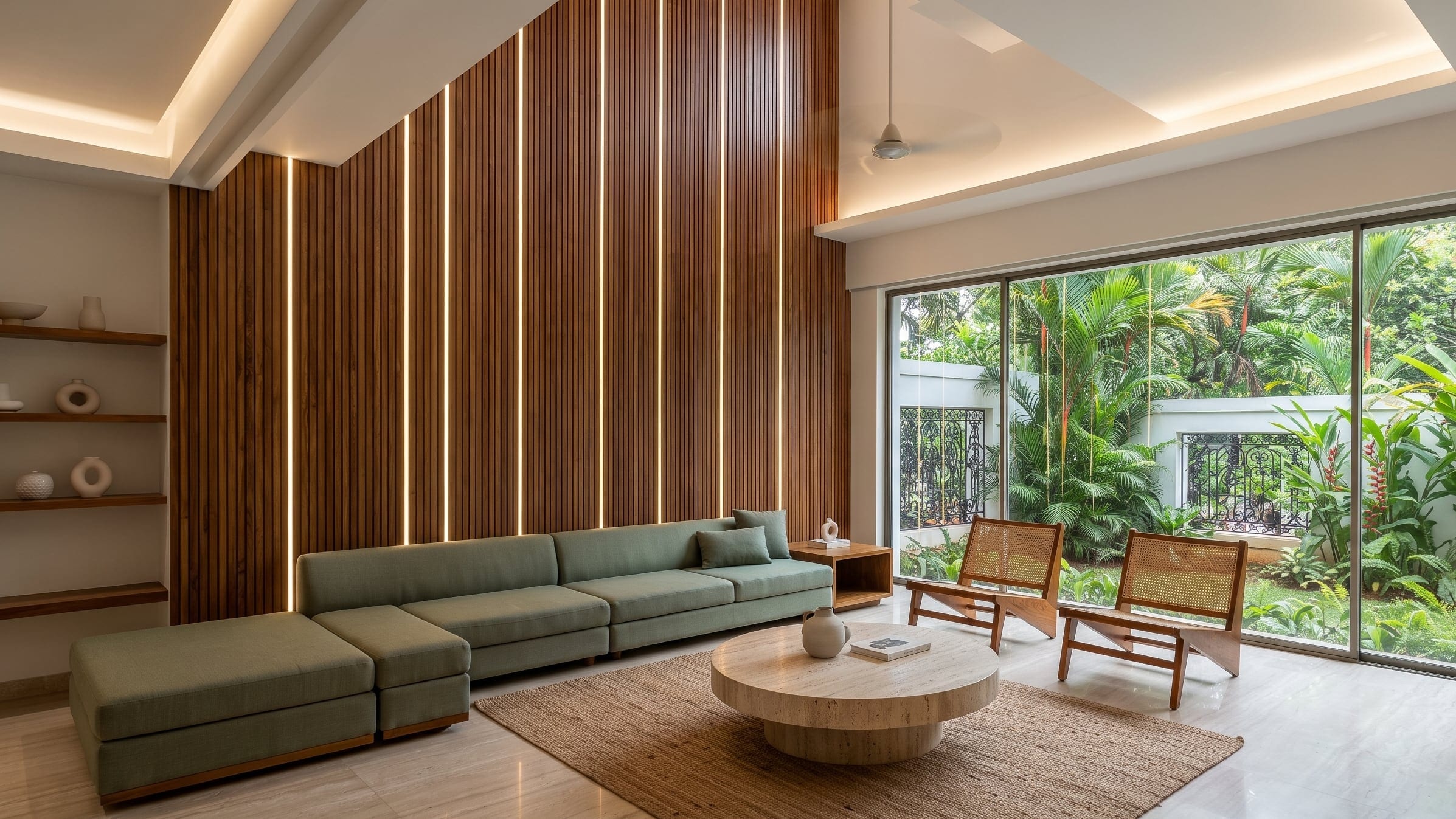
False ceiling and lighting

False ceiling and lighting planned together, because a ceiling is mostly a way to place light. Gypsum, POP or PVC, with cove, spot and task layers set out before the electrical work starts.

A double-height entrance with a crystal chandelier and a fluted feature wall

What's included

  • Ceiling design per room, coordinated with AC and fan positions
  • Gypsum, POP or PVC as suited to the room
  • Cove, spot, pendant and task lighting layout
  • Electrical point planning and circuit coordination
  • Painting and finishing

False ceiling and lighting we have designed

Each one opens the project it belongs to.

Options and finishes

Each choice changes both how it looks and how it ages. The materials guide explains the trade-offs.

  • Ceiling material

    Gypsum board for most rooms, PVC where moisture rules it, POP where profiles are complex.

  • Lighting layers

    Ambient, task and accent, with the switching planned so the layers are usable.

How long it takes

It depends. How long false ceiling and lighting takes is decided before anything is built.

What decides it

  • How much is in scope
  • How quickly design and materials are signed off
  • What your apartment association allows, and when
  • The condition of the space as it stands today

What we check at the site visit

  • Every relevant measurement, against the builder drawing
  • Service positions as actually built
  • Access, working hours and permit rules

This is finalised with you after our site visit, once measurements, design and materials are agreed.

What changes the cost

  • Area covered and how much of it is a peripheral cove versus a full ceiling
  • Material — gypsum, POP or PVC
  • Number of light points and fixture type
  • Whether AC ducting or concealed curtain pelmets are included
Work out an indicative range

A ceiling is a lighting decision

Most homes are handed over with one light point per room. Everything that makes a finished interior feel considered at night — cove light, a pendant over the dining table, spots on the TV wall — is decided at ceiling stage.

Questions about this

Do I need a false ceiling in every room?

No. A false ceiling earns its place where it hides ducting, carries cove lighting or brings a very high ceiling down to a comfortable height. In a standard bedroom with no ducting, a peripheral cove often does everything a full ceiling would, for less money and less lost height.

Gypsum or POP — which is better?

Gypsum board is factory-made, goes up faster, cracks less and gives a cleaner line, so it is the default for flat ceilings. POP is mixed on site and suits curved or intricate profiles. PVC is used in wet areas where both would suffer.

How much ceiling height do I lose?

A peripheral cove typically takes very little at the edges and none in the centre; a full ceiling takes more. In apartments with standard heights, we usually recommend keeping the centre open.

Should lighting be warm or cool?

Warm light for living rooms and bedrooms, neutral for kitchens and study areas where you need to see clearly. Mixing colour temperatures within one sightline is the mistake that makes a finished home feel slightly wrong without anyone being able to say why.

Can lighting be planned after the ceiling is up?

Not well. Points have to be wired before the boards close, so the lighting plan comes first. Adding a spot afterwards means opening the ceiling again, which is why we settle the lighting layout at design stage.

Start with a free site visit

A designer measures your flat, checks the builder's points and gives you a written scope. Monday to Saturday, 09:30–18:30.

Book a site visit
CallWhatsAppGet estimate